The Regenerative Leadership Programme is a seven month leadership development Programme (CPD Accredited) built on a simple but radical premise. That if you want to change how a leader performs under pressure, you have to work at the level where performance is actually driven. Not just frameworks and theory. Instead we focus on the nervous system, the physiology, the biology of how humans think, decide, and behave when the demands are highest.
We use gold standard biometric technology to measure what no other leadership programme measures. Every participant tracks their real time stress load, recovery quality, and energy patterns throughout the seven months. Combined with REACH psychometric profiling and expert coaching, this gives each leader a level of self-knowledge that is precise, personal, and genuinely useful under pressure.
Designed for Lasting Change
We work at the level of the nervous system. The physiological patterns that determine how a leader responds under stress, how they recover, how their state affects the people around them. This is not soft. It is the most evidence-based approach to leadership development available.

The Regenerative Leadership Programme delivers one of the most immersive leadership interventions available. Participants develop the human skills and insights needed to lead well in complex, high pressure environments, while their physiological data is tracked and coached throughout, making the development visible, personal, and measurable in a way traditional programmes cannot replicate.
The programme brings together formal learning, biotech coaching, individual leadership support, and group connection into a single cohesive experience. Each element reinforces the others, creating the conditions for change that actually sticks.
Our programmes integrates body based techniques to work with the nervous system, the regulate stress, overwhelm and access the states of deep thinking and peak performance.
The programme is designed to work at three levels simultaneously. The individual leader, their team, and the wider organisation. Each layer extends and embeds the learning further, so the impact is not contained to the person in the room but ripples into how they lead, how their team functions, and how the organisation performs.
All elements of the programme can be tailored to the specific needs and context of your organisation.
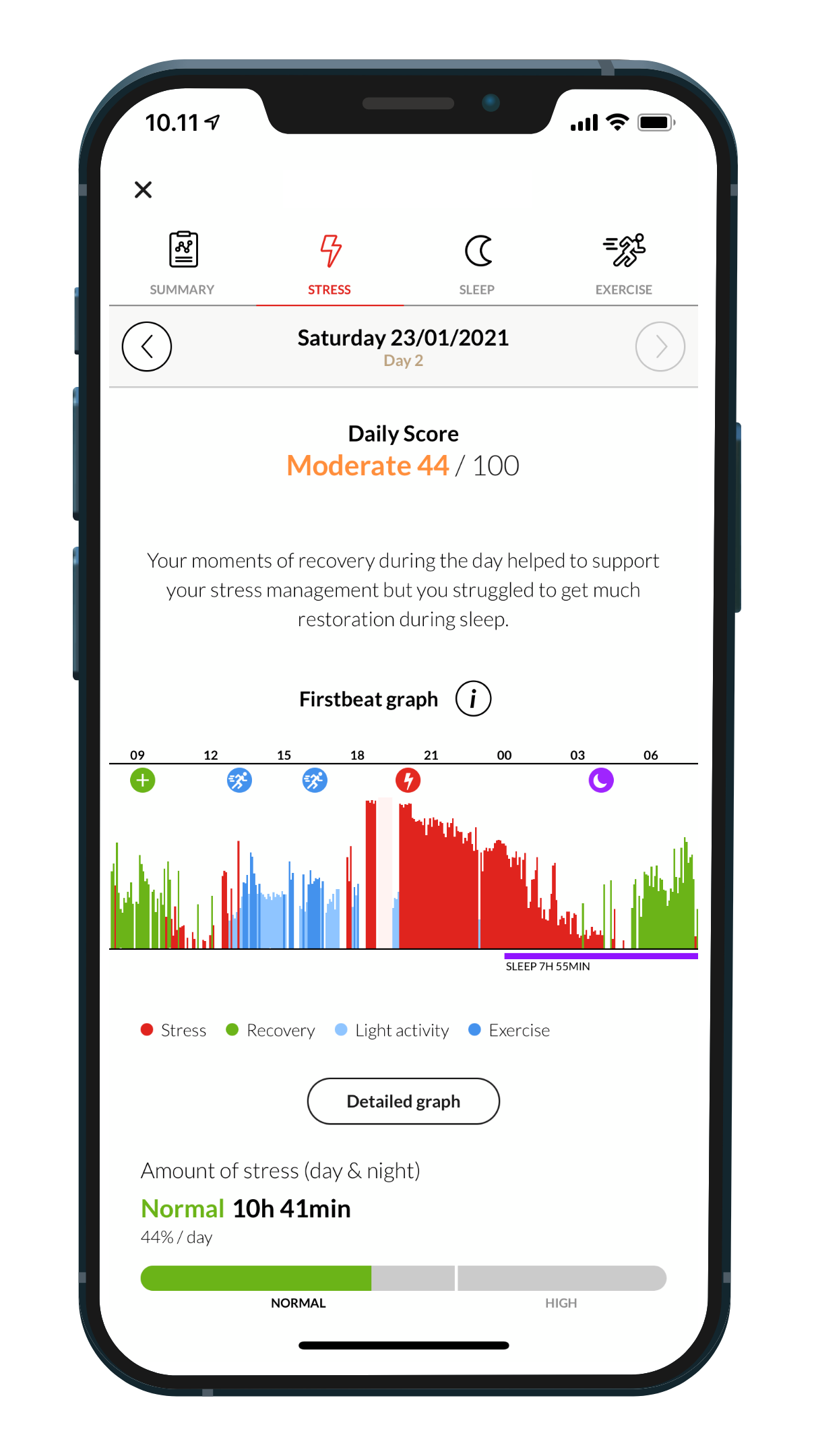
Before any development begins, we establish a precise baseline for every participant. Using Firstbeat biometric technology we capture each leader's stress load, recovery quality, and energy patterns in real time. We combine this with REACH psychometric profiling to understand personality, communication style, and team dynamics.
Most programmes skip this entirely. We think it is the most important step. You cannot change what you cannot see, and your leaders cannot see what their physiology is doing to their performance. Now they can.

Six monthly sessions delivered over six months. The spacing is not a convenience, it is the science. Neuroscience tells us that learning embeds when it is spaced over time, applied between sessions, and built on incrementally. Each session connects to the last and prepares the ground for the next.
Sessions are available face to face and online, designed to fit inside a working schedule without requiring leaders to disappear for days at a time. The learning comes to them, not the other way around.

With the insights gained from the needs assessment, we develop a tailored strategy designed to enhance leadership, foster workplace well-being, and build resilient Between sessions every participant has access to executive level bio-coaching, reviewing their Firstbeat data monthly and making it personal and actionable. They also receive The Regenerative Report, a personalised monthly document integrating their physiological data, coaching notes, and strengths profiling.
This is where the individual thread runs through the group experience. The programme works at both levels simultaneously, the cohort and the person inside it.

The final month is about consolidating the learning - and celbrating the excellent work of the group. Leaders have spent six months doing extending, honest work.
This is where we bring it together, reflect on what has actually changed, and make sure it holds once the programme ends. Every participant completes a close-off coaching session. Some find this the most valuable part of the whole experience.
Most leaders know they are stressed. Very few understand what that stress is actually doing to their brain, their decision making, and the people around them. This month we establish the biological foundations of leadership performance. Participants learn how the nervous system works under pressure, what the body budget is and how it drives cognitive capacity, and why some leaders seem to stay composed when everything around them is reactive. By the end of month one every participant has a Firstbeat baseline and a clear picture of where they are starting from. Pariticipants also learn body based tools to help them recognise and regulate the stress in the body, keeping thinking online. This is the foundation everything else is built on.
This is one of the most misunderstood months in the programme and consistently one of the most impactful. Joy is not a personality trait or a mood. It is a physiological state with direct implications for creativity, collaboration, decision making, and team performance. Leaders who can access positive affect under pressure think more broadly, connect more readily, and create the conditions for psychological safety in the people around them. This month we explore the neuroscience of positive emotion, attention bias, and what it means to lead from a state of genuine engagement rather than managed stress.
Physiology Data is used to create awareness and guide conversation, not to prescribe rigid rules. Coaching focuses on interpreting patterns in context and translating insight into practical, realistic changes. So that you are able to make meaningful change to your wellbeing, health and performance.
The ability to stay regulated in a difficult conversation is one of the most valuable leadership skills there is. And one of the hardest to develop without understanding what is happening physiologically when the stakes are high. This month we work on the neuroscience of influence, the biology of conflict and confrontation, and how to become the steadiest presence in the room when everything around you is reactive. Participants develop practical skills for difficult conversations, boundary setting, and communicating with clarity under pressure.
Change is no longer a phase organisations go through. It is the permanent condition. This month we explore how the brain responds to uncertainty, why change initiatives so often fail at the human level, and what leaders need to understand about their own belief patterns and stress responses to navigate complexity without losing themselves or their teams in the process. Participants develop the adaptive capacity to work with uncertainty rather than against it, and the self-awareness to update the patterns that are keeping them stuck.
Psychological safety is not a culture initiative. It is a neurobiological condition that either exists in a team or it does not, and it is almost entirely determined by the regulated state of the leader, and the culture they are within. This month we look at the science of trust, co-regulation, and what genuine psychological safety feels like, looks like, and requires from the person at the front of the room.
Participants develop the communication skills and nervous system awareness to build teams that connect, challenge each other, and perform together at a level that individual talent alone cannot produce.
The final month is about consolidation. Leaders have spent six months doing stretching, honest work. This final session is designed to bring everthing together, reflect on what has actually changed, and make sure it holds once the programme ends.
Every participant completes a close-off coaching session reviewing their Firstbeat data from month one against where they are now.